
Desert Hot Springs Previous Resident Sources
A house history needs a source for each era. The recorder web index is strong for recorded parties after its cutoff. Assessment rolls, deeds, permits, directories, census schedules, probate, and obituaries answer different parts of the question. The table avoids a common mistake: calling an owner a resident or treating a directory listing as a deed.
Previous residents research works best when each name is attached to a dated address or land relationship.
| Source | Years it covers | Where held | What it shows |
|---|---|---|---|
| Recorder web index | 1974 to present | Riverside ACR | Recorded parties, document type, date, document number |
| Recorder books and media | Before 1974; earlier coverage varies | ACR counter or archives | Earlier chain, book or page, legal description |
| Assessment roll and maps | Current and historical holdings vary | Riverside ACR | Owner at assessment date, parcel genealogy, maps |
| City permits and code | City-era holdings; earliest year not published | Desert Hot Springs departments or CPRA | Construction, alteration, applicant, contractor, dates |
| Criss-cross or city directories | Exact DHS runs unverified | Libraries and archives | Listed occupant by address when a volume exists |
| Federal census | Public through 1950 | NARA and library databases | Household, ages, relationships, birthplace, occupation |
| Probate and obituary | Probate mostly 1994 to present online; newspaper years vary | Court, library, and newspaper collections | Death, estate, kin, and last-residence clues |
Start with the era you need. Current ownership begins at ACR. A 1950 household begins with the census and a regional directory. A resort-era structure may require permits, maps, deeds, advertisements, and historical society material.
For previous residents, the starting era determines which office or collection is worth the next request.
Desert Hot Springs Previous Resident House History
Normalize the address, run Riverside Property Search, and save the APN, situs, transfer facts, legal description, lot or block, subdivision, and map-book reference. The web result can reach back to a transfer from 1972 even though the recorder web index begins in 1974. That older transfer date is a lead, not an online deed image.
Riverside ACR says ownership is public at office computers or microfiche by address or APN, while the online property result omits owner identity. The eastern-county full-service counter is ACR Palm Desert at 38-686 El Cerrito Road, with published hours of 8:00 to 4:30. Check the live ACR locations page before travel and ask which historical assessment fields are available.
The ACR search-mode hub shows the recorder, clerk, map, and copy routes.
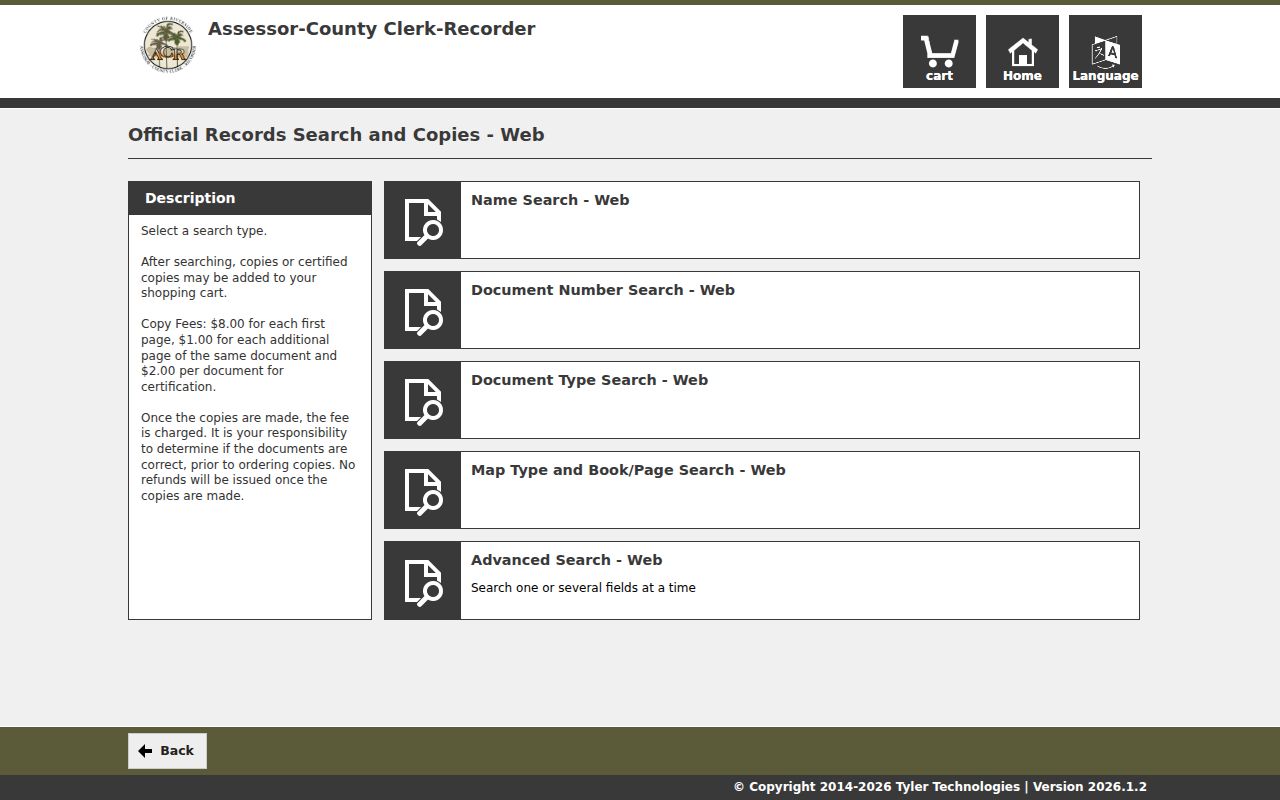
The search-mode screen is the handoff from an address lead to a named recorder or clerk record.
Desert Hot Springs Previous Resident Deeds
A chain of title is the sequence of recorded transfers tied to the same land. Begin with the current assessment owner, locate that person's acquisition deed, and treat the seller or grantor as the next backward target. Confirm the same legal description, APN predecessor, lot, block, subdivision, and recorded-map reference at every step. An APN can change after a split or merger, so the legal description is the anchor.
The previous residents of a parcel may appear only after the deed chain is matched to a directory, census, or obituary date.
- Copy the current owner, assessment date, APN, and legal description from the ACR office route.
- Search the recorder by owner name, deed type, and a tight date range. Note the document number and recording date.
- Read the instrument for grantor, grantee, legal description, execution date, and map references.
- Search the seller or prior grantee in an earlier period and compare the land description, not just the name.
- Repeat until the web index ends, then carry the last confirmed book, page, map, and estimated year to the counter or archive.
- Grantor
- The person or entity transferring an interest in the recorded instrument.
- Grantee
- The person or entity receiving the interest named in the instrument.
- Chain of title
- The linked sequence of transfers for one piece of land.
- Legal description
- The land description that controls the deed when a street label or APN changes.
- Recording date
- The date the document entered the public record, which can differ from signing or closing.
A deed chain shows recorded interests. It does not identify every previous resident, guest, or household member.
Desert Hot Springs Previous Resident Cutoff
Riverside recorder documents are indexed online from January 1, 1974. The county clerk index reaches January 1, 1893, but clerk documents and recorder documents are different sets. If an older deed is absent online, continue through recorder books, microfilm, staff-assisted media, the California State Archives, FamilySearch catalog films, or a library referral. Do not describe the deed as missing until the older channels have been checked.
Previous residents before 1974 require the counter, books, media, or a verified archive route rather than a second web search. ACR advanced search fields include document number, recording-date start and end, name, document types, and an advanced name-search control. Exact-name order matters, and operators can require, exclude, sound alike, substitute, or prefix-match terms. A mailed pre-1976 staff search is limited to a two-year window following the estimated year supplied, so the assessor transfer date matters.
The Riverside advanced document search shows the live fields.
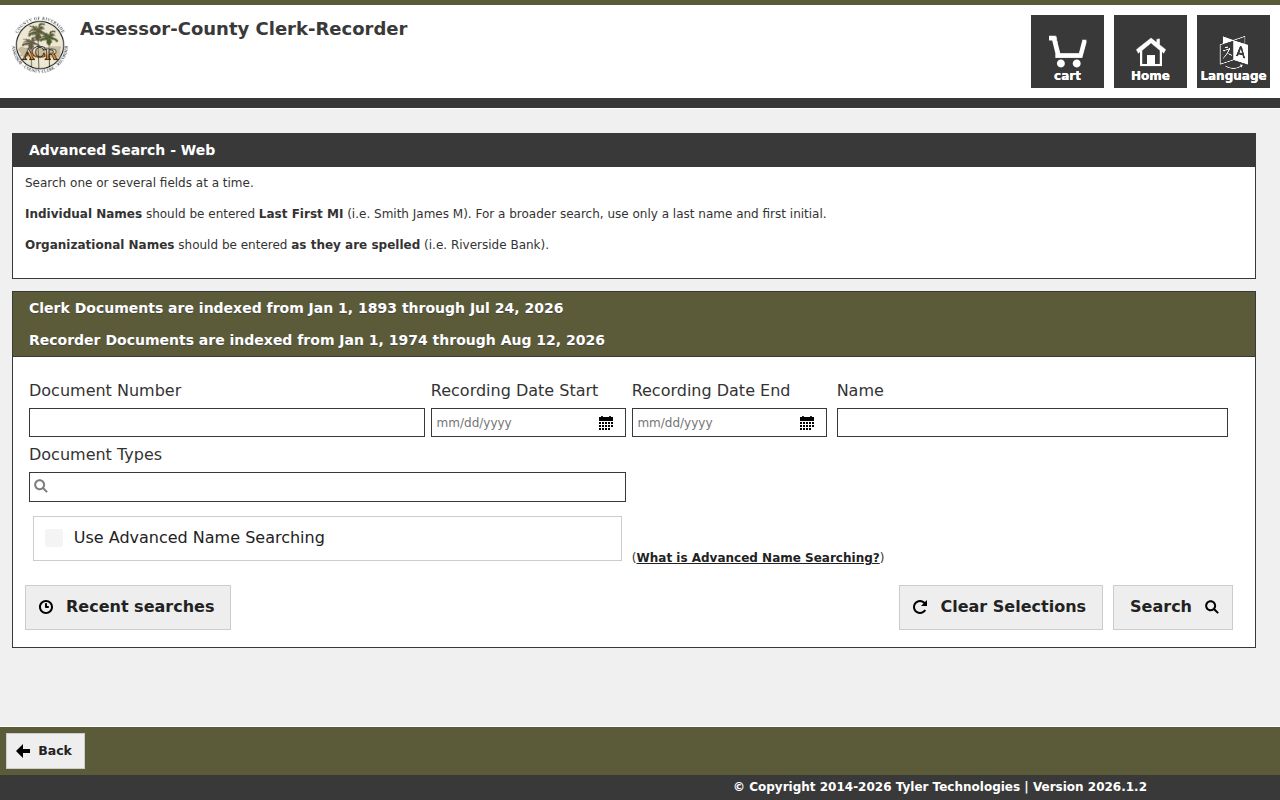
The advanced search view is useful for narrowing a known owner and date before a copy order or counter request. Recorder copies cost $8 for the first page, $1 for each additional page, and $2 for certification per document. Online orders average roughly 48 hours plus a card fee. Confirm the document number before paying because the county does not refund a copy after it is made.
Desert Hot Springs Previous Resident Parcel Maps
Address history can break when a parcel splits, merges, changes subdivision references, or receives a new street label. Carry the lot, block, tract, parcel map, book, page, acreage, dimensions, and legal description through the search. RivCoView and assessor map PDFs can show adjoining APNs and recorded-map references even though the PDF omits owner and street address. Riverside maintains more than 21,000 assessor maps. The map is a navigation index, not the final identity source. Compare it with the current APN, an older deed, and a city permit or parcel-map file. A historical street name may be bridged through a neighboring parcel or a recorded map when a direct address search fails. ACR branch information helps identify the in-person counter for older assessment material.
Older parcel work often requires a staff channel because the public web index is not the full historical record.
The county office locator is also the source to check before planning a records visit.
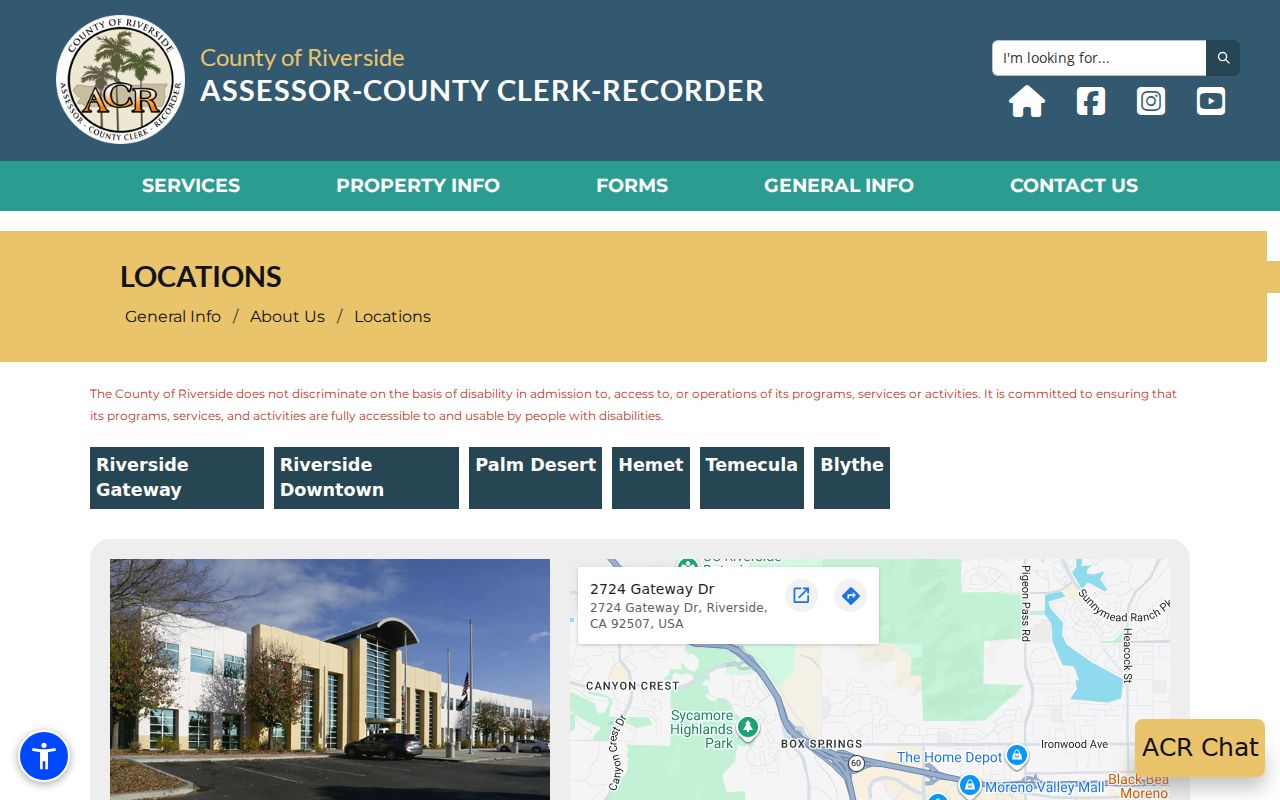
Branch services and hours can differ, so a current location check belongs in the research notes.
Date Desert Hot Springs Past Resident House
City permits and code records can date construction, alteration, demolition, parcel changes, and use changes. Request existing permit cards, applications, issued permits, final inspections, plan checks, encroachment permits, easement deeds, lot-line adjustments, street vacations, and code cases as distinct record types. The applicant or contractor can be a useful name clue, but not proof of ownership or occupancy.
Desert Hot Springs Community Development combines planning, building, and code routes. For an older address, compare the permit date with the deed chain, assessment transfer, aerial or map record, and directory entry. If the parcel falls outside the incorporated boundary, Riverside County may hold the relevant file. An agency need not create a house-history list from separate records.
Use the city's community development route for the current department path. Keep the APN and legal description in the request so a street label change does not hide the parcel.
Pair Desert Hot Springs Directories and Census
Federal census schedules are public through 1950 under the 72-year rule. They can show household members, ages, relationships, birthplace, occupation, and address or enumeration geography depending on the year. Desert Hot Springs did not yet have a stable modern city boundary for much of that period, so search the historical township or enumeration district rather than insisting on a current city label.
Pairing a census year with a city directory year creates a check on both. A directory may give a street and listed occupant while the census gives household relationships. A deed can identify the land interest. A newspaper or obituary can explain a move or death. None should be forced to agree when the dates describe different snapshots.
That pairing is how previous residents become a dated household clue instead of a guess based on a name.
- Choose a directory year and transcribe the address, name, locality, and page.
- Find the nearest public census schedule and record the enumeration district and household line.
- Compare names, ages, relationships, birthplace, and address clues without smoothing spelling differences.
- Use a deed, permit, obituary, or later directory to test a change between the two dates.
The Desert Hot Springs city directory collections page covers the regional 1893–94 volume, archive shelves, and the unverified local year-run problem.
Desert Hot Springs Past Resident House History
Research did not verify a Desert Hot Springs-specific Sanborn sheet or year run. Sanborn maps can be useful where a catalog confirms coverage, but do not promise a sheet that was never located. Use assessor maps, aerials, permits, deeds, census schedules, newspapers, and library resources first. The Riverside house-history resources can point to regional material.
Resort-era and manufactured-home communities need special care. A deed may describe the park or resort parcel rather than a particular space. A business license or historic advertisement may identify a proprietor, while the assessment roll identifies the land interest. A prior resident may appear only in a newspaper, directory, obituary, or voluntary community record.
Previous residents research should preserve that distinction between a person tied to the land and a person listed at the address.
For a personal house-history project, build an era ledger: source, date, exact address or legal description, person or entity, relationship to the property, and confidence. This format makes gaps visible and keeps a clue from becoming a conclusion.
Close a Desert Hot Springs Past-Resident Trail
Probate, obituary, and cemetery records can close a trail when an owner or listed household member dies or moves. Riverside probate is online for nearly all cases from July 1994. Search a case name or number, then read the petition, notice, order, and heir clues that are actually public. The California Digital Newspaper Collection, Chronicling America, library databases, and regional Desert Sun coverage can supply a last residence or kin lead.
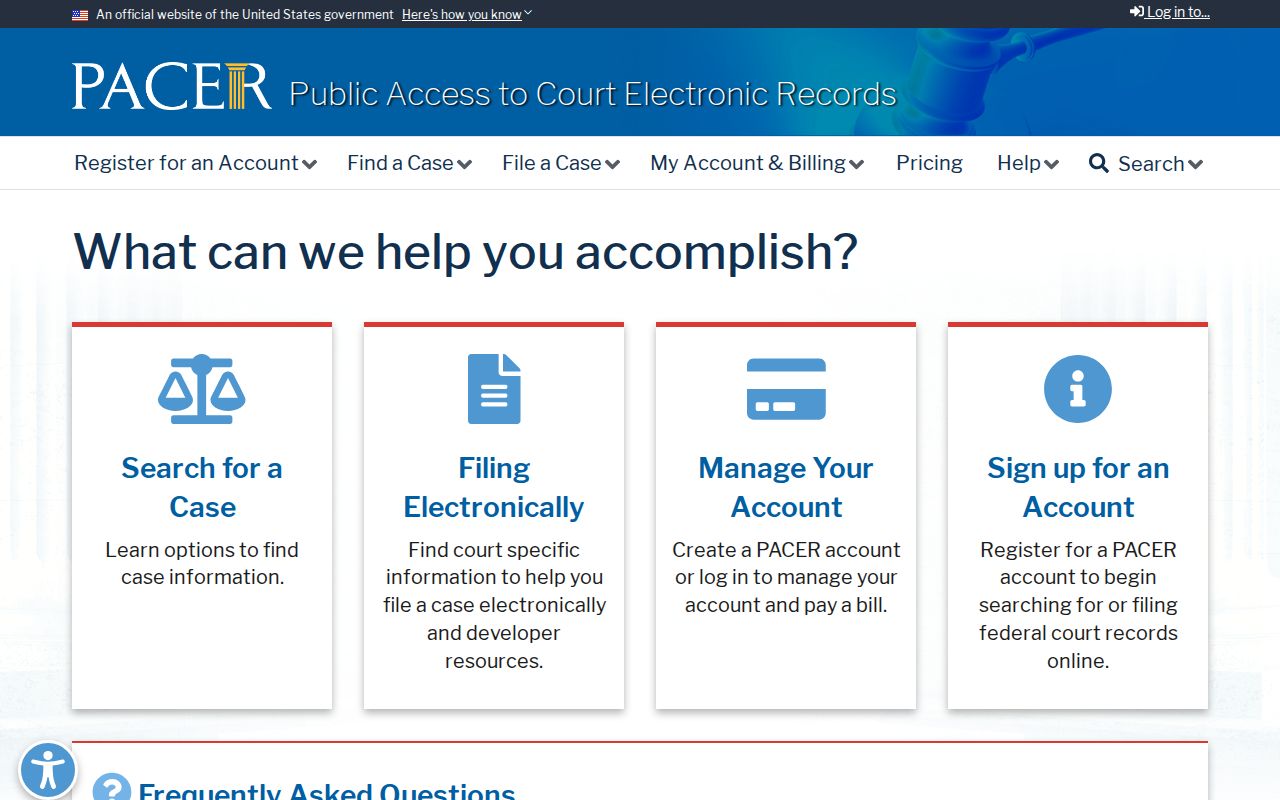
An obituary is not a certified vital record. A probate heir is not automatically the person who occupied the house. Use a death record, deed, court filing, or later directory to confirm each link. If the trail points to federal litigation, PACER and the Central District of California are separate sources with their own access and fee rules.
PACER and the Central District of California are relevant only when the record is federal.
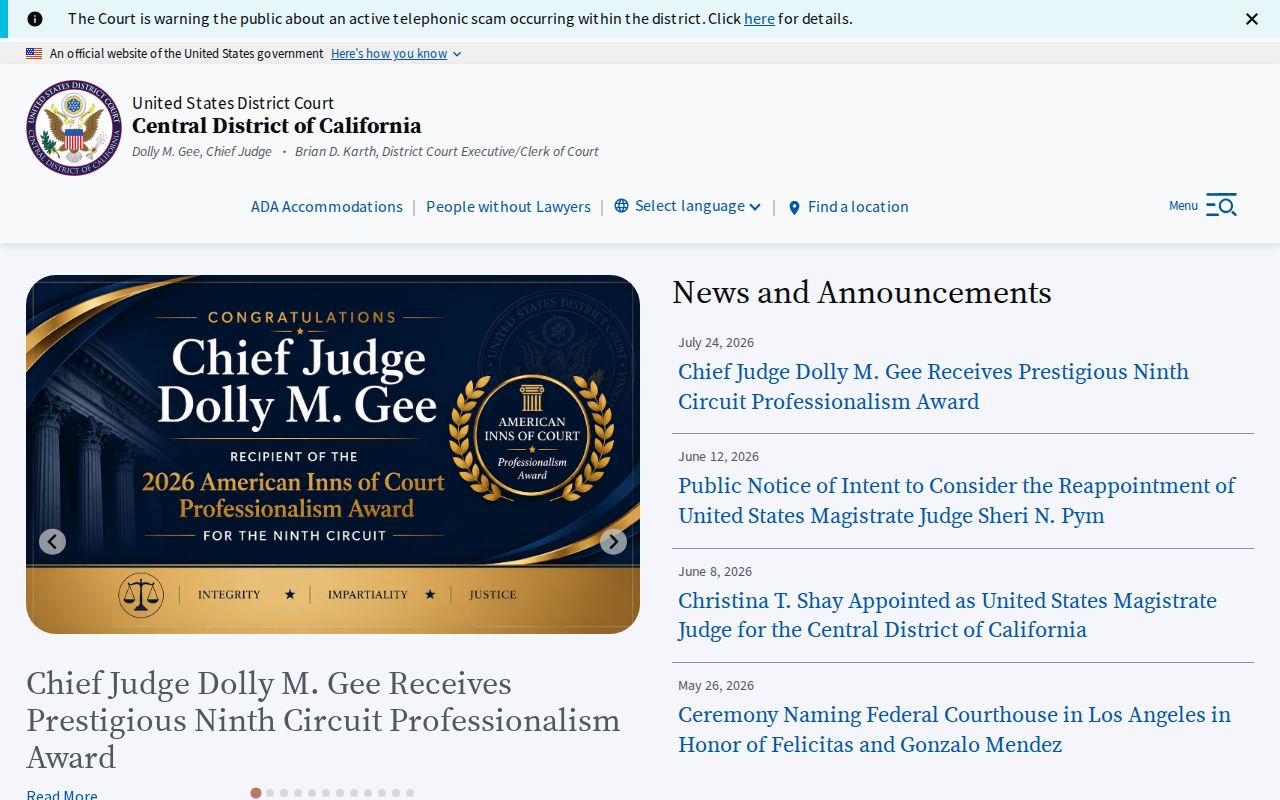
The federal court source is a separate branch of a past-resident trail, not a substitute for the Riverside deed and probate records.
Desert Hot Springs Past Households
Previous residents can be reconstructed for family history, ownership history, estate work, and local history, but an old address record does not grant a right to contact or confront anyone. A directory line can be stale. A deed party may never have occupied the parcel. A census household is a snapshot. Keep the purpose narrow and verify with the custodian when a conclusion matters.
A previous residents conclusion should state the source, the date, and the relationship shown by that source. California privacy rules protect Safe at Home participants, confidential voters, DMV information, signatures, and other fields. A recorded document can contain redactions or restricted attachments. If a person is protected, use the official program and do not try to rebuild a private address from other sources.
Lawful house history. Use the prior-owner and past-household trail for personal, lawful research. Never use a Desert Hot Springs previous-residents search to stalk, harass, intimidate, or harm a person.
Note: The strongest address history names the land, the date, the source, and the limited relationship each record actually shows.