
Finding Desert Hot Springs Residents
No single roll names everyone in Desert Hot Springs. Each public record answers a narrow question with its own custodian. An assessor result describes a parcel. An office lookup gives the current assessment-roll owner. A recorded instrument shows only a transaction party. A voter record is controlled data, not a reverse directory. Libraries and regional archives fill in past households. Court, probate, obituary, business, and license records handle narrower questions. The Desert Hot Springs residents directory works best as a set of record paths.
Begin with the strongest fact you already hold. An address can yield an APN, a map, and a deed lead. A full name can be tested against court, recorder, entity, or license indexes. An old date points toward census, newspaper, or directory material. Each step preserves the difference between an owner, a party, a registered voter, a business contact, and a household member. That keeps a directory search trustworthy. It is not a guess.
- Normalize the street line with an address-to-ZIP check, then keep the exact spelling and postal city.
- Run the county address search by street number and name, or by APN, to obtain parcel facts.
- Open the parcel in RivCoView, note adjoining APNs and the recorded-map reference, then use an ACR public counter when ownership must be checked.
- Search the recorder by the owner name, document type, and date range; read the instrument rather than treating an index line as present occupancy.
- Choose the next source for the question: a restricted voter-file route for a lawful purpose, a court case number, a vital-record application, or a library and archive collection for history.
Desert Hot Springs Records Desks
Records for Desert Hot Springs sit with city, county, and state custodians. The Riverside County Assessor-County Clerk-Recorder combines parcel, recorder, clerk, and marriage services. It also handles local vital services under one roof. The city clerk holds correspondence, council material, permits, licenses, and code records. The Registrar of Voters controls voter-file products. Riverside Superior Court keeps case indexes and registers of action.
Pick the office that matches the relationship being tested. ACR can connect an address or APN to an assessment-roll owner at an office computer. The city can disclose a permit or request record. But an applicant is not automatically an owner or occupant. A court result confirms a filed case, not a person's whole life. These distinctions keep a Desert Hot Springs residents directory honest. They stop one field from stretching into a claim it cannot support.
Riverside County ACR
Palm Desert counter
38-686 El Cerrito Rd, Palm Desert
8:00 a.m. to 4:30 p.m.
Desert Hot Springs City Clerk
Municipal records and CPRA route
City clerk email: cityclerk@cityofdhs.org
760-329-6411
Municipal records contact
Riverside County Registrar
Voter data and election records
2720 Gateway Drive, Riverside, CA 92507
951-486-7200, Monday to Friday 8:00 to 5:00
The Riverside County Assessor-County Clerk-Recorder service hub anchors the county side of any lookup. Its branches and products differ from location to location, so check the live location page before driving out.
Note: A county office can identify the record custodian without proving that every person connected to a parcel lives there.
Desert Hot Springs Resident Address Trail
Riverside Property Search is an address-to-parcel tool, not an online owner directory. Enter a street number and name. Or use an assessment number or APN if you have one. Results can expose the situs, property type or use, and assessed land and improvement values. Sale or transfer facts, permits, and a linked assessor map appear too. The owner name stays offline by design. ACR states that owners can be identified by address or APN at its public office computers. Microfiche offers the same at the office.
RivCoView adds the map layer on top. Search by a single APN, several APNs, or an address. Then activate Select Parcel(s) to click the subject and adjoining polygons. The upper panel can list APN, owner, and address where available. The lower panel links parcel maps, tract maps, map services, and reports. County layers cover parcels, address points, and city and county boundaries. Annexations, ZIP codes, census tracts, and school or water districts round out the layers.
| Search field | What to enter | What it contributes |
|---|---|---|
| Address | Street number and name, such as 1234 Main | Matches a situs and returns parcel facts |
| Assessment Number / APN | County parcel format from a result or map | Stable parcel key for GIS and counter work |
| Map browse or parcel click | Single APN, multiple APNs, or selected polygons | Shows adjoining parcels and recorded-map context |
Keep both facts when the mailing city clashes with the incorporated boundary. A “Desert Hot Springs” mailing line can reach unincorporated Riverside County. The parcel boundary decides which city or county department handles permits. The postal label does not decide that. The ACR parcel result shows the level of detail available. It keeps ownership off the web.
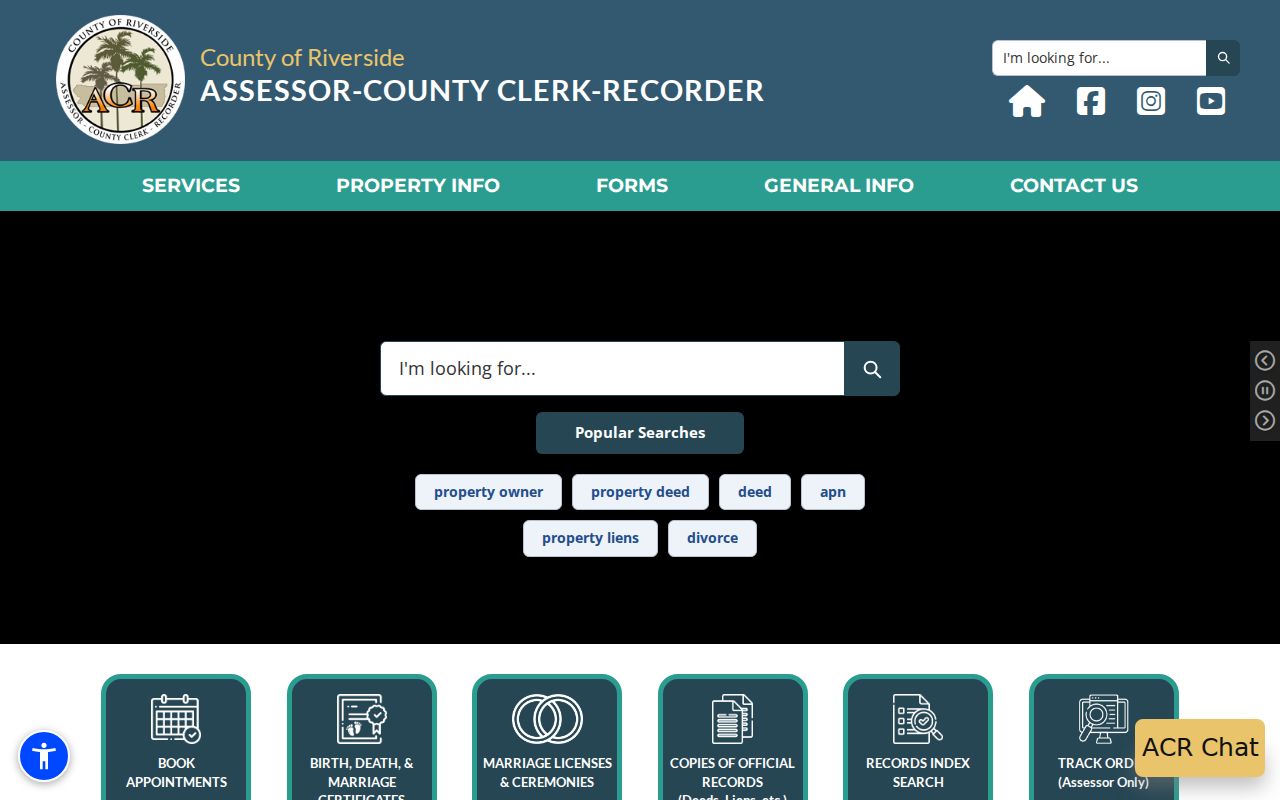
The county service screen repeats the same handoff. The web resolves the property, and the ACR counter supplies the public assessment-roll ownership lookup.
Desert Hot Springs Recorder Records After 1974
The Riverside recorder index runs online from January 1, 1974. The county clerk index reaches back to January 1, 1893. So one word, “records,” covers two different clocks. A deed, deed of trust, reconveyance, lien, notice, release, or map follows the recorder trail. A fictitious business name, marriage license, or clerk registration belongs to a different product line. A blank online recorder result may mean “before the cutoff” rather than “never recorded.”
The advanced document search accepts a document number, a recording-date range, a name, document types, and an advanced name-search control. Search help explains exact order and wildcard behavior. Operators include plus for a required term. Minus is for exclusion. There is also a sound-alike symbol, a single uncertain character, and a prefix wildcard. For a lien search, use the owner name. The recorder index is not an address search.
- Recorder index: January 1, 1974
- Recorded parties, document type, recording date, and document number; use ACR books, media, or a staff search for older material.
- Clerk documents: January 1, 1893
- Fictitious business names, marriages, and clerk-filed records; use the county counter or the relevant product request when an online result is absent.
- ACR copies: current index entries
- Instrument images or certified copies; order only after confirming the party, document type, and recording number.
Searching the recorder index online is free. Copies are not. Expect $8 for the first page. Add $1 per additional page. Certification costs $2 per document. An online copy order runs about 48 hours on average, plus a card fee. And once a copy is produced, there is no refund. Before ordering through the ACR advanced document search, confirm the party, the document type, and the recording number.
Current Desert Hot Springs Resident Sources
Think of a current Desert Hot Springs residents directory as a web of relationships. It is not one tidy list. No single source answers everything. Some of these records barely mention residents at all, and none works as a full household roll for the city. Their value shows up when the question is narrow. You might need the name tied to a parcel. You might need the party recorded on a deed. Or you might need the person whose voter status was verified in Riverside County. A business or public license can also link a name to a place. That can help when other trails go cold.
| Source | Relationship shown | Keeper | Access |
|---|---|---|---|
| Property Search and RivCoView | Parcel, situs, assessment, sales, permits | Riverside ACR and GIS | Free online; owner withheld online |
| Assessment roll | Owner at the assessment date | Riverside ACR | Office computer or microfiche |
| Recorder index | Party to a deed, lien, or notice | Riverside ACR | Free index; paid copies |
| Voter status and voter file | Verified status or qualified registration data | California SOS and Riverside Registrar | Self tool or restricted application |
| City permits and boards | Applicant, contractor, public official, or civic speaker | Desert Hot Springs | Existing records or public agendas |
| Business and professional indexes | Entity, agent, license, or business address | California SOS and DCA | Free public searches |
Start with whichever source sits closest to your question. A property result is the natural opening move. It starts an address chain worth following. A name sometimes must be checked against court, vital, probate, or license material. The Desert Hot Springs resident lookup route is the stronger fit there. An older city directory, by contrast, suits a household question from the past more than a current ownership one.
Desert Hot Springs Court Record Searches
Court records for Desert Hot Springs flow through Riverside Superior Court. The public portal spans civil, criminal, family, probate, and traffic matters. Branch coverage and record dates differ. Searching by case number is free. That search can open a register of actions. Name searches in the civil, criminal, and traffic categories consume credits instead. Hearing details appear on current and next-seven-day calendars, and nonconfidential documents download for a fee.
The historical reach varies by branch and case type. Palm Springs civil and small claims coverage starts in September 1993. Indio civil series reach back to May 1991 or September 1993. Family law reaches to April 1992. Probate mostly reaches to July 1994. Criminal series begin around 1990. Files purged under Government Code section 68152 may be missing. Sealed, juvenile, adoption, and other confidential records stay closed.
A clerk search costs $15 per name as published. Portal name credits start at $1 for a single name and climb in bundles, while downloads follow a per-page schedule. Prices shift, so check the Riverside court access page for the live rate and branch rules before paying.
A Desert Hot Springs Business Records Trail
Desert Hot Springs runs on resorts, spas, lodging, construction, and personal services. Each of those trades leaves a paper trail. Business records can link a name to a company. They cannot pin that name to a home address. Start with the California Secretary of State bizfile. It lets you search by entity name or file number. A detail page there may list formation or registration dates, jurisdiction, standing, street and mailing addresses, agent for service, due dates, and available filings. California bizfile shows the state entity search fields and the result path.
From there, pair the entity with a Riverside fictitious business name filing or a city license or permit. Try a professional lookup if the person works in a regulated service. The Department of Consumer Affairs search covers contractors, real estate, healing arts, cosmetology, HVAC, pool, solar, and hospitality licenses. It accepts a board, license type, license number, business name, first name, last name, or registry number. Used together, these records corroborate a public business association. Just remember the limit. A business address marks a corporate relationship, not a household.
One name is rarely enough. The state entity search gains real force when it is paired with an entity number, a status, a filing date, or an agent relationship. California DCA license search supplies a second independent identifier, which matters most when the name is common or the business goes by a trade name.
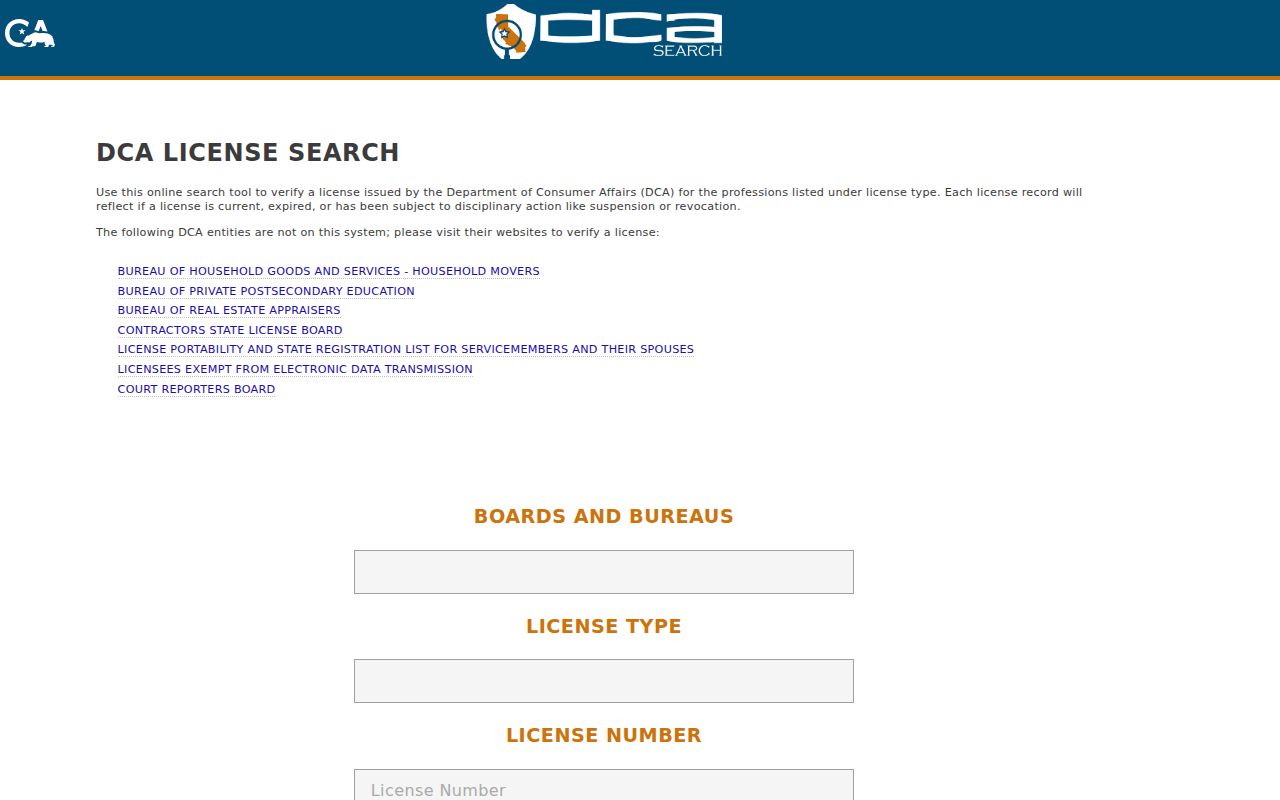
A license result typically shows status, dates, a public address, and any discipline links. Still, it documents a license relationship rather than a full resident record.
Narrow Desert Hot Springs Public Records Requests
For city-created material, the city clerk is the door to knock on. Council records, ordinances, resolutions, and contracts all pass through that office. Election filings, correspondence, permits, and code files do too. The city runs its requests on NextRequest. Completed requests can be searched before anything new is filed.
A strong request names the department and a tight date range. It also lists a street or APN, a person or business, and the exact record type. With those anchors, a municipal entry adds a clean line to a Desert Hot Springs residents directory.
California Public Records Act requests may be oral or written. A written scope is safer, though, because it preserves the history. The agency generally gets 10 calendar days to decide whether responsive disclosable records exist. An extension of up to 14 days is allowed for unusual circumstances. Production itself can take longer. The city also has no duty to answer a research question or build a new compilation.
- Search prior NextRequest records for the department, address, APN, project, or name.
- Ask for existing permit cards, applications, issued permits, final inspections, or code case records separately.
- State whether inspection, electronic copies, or a specific document is wanted, and allow releasable portions to be separated.
- Use the custodian's response to narrow a follow-up instead of asking the city to identify a person.
The Desert Hot Springs City Clerk page identifies the municipal contact route.
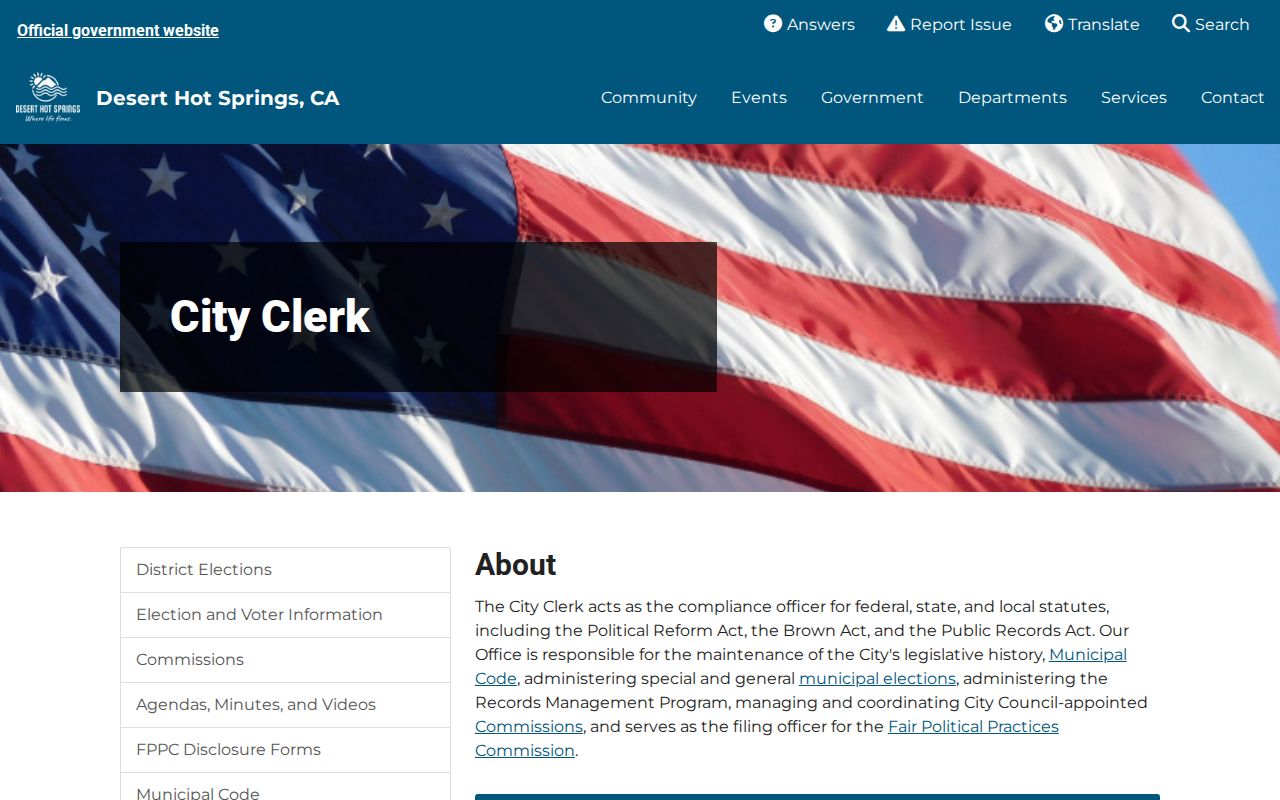
A city contact screen points to one thing: municipal records document city actions, not a citywide resident list. The city's NextRequest portal shows every prior public records request by title. Skimming those titles first helps narrow a new ask.
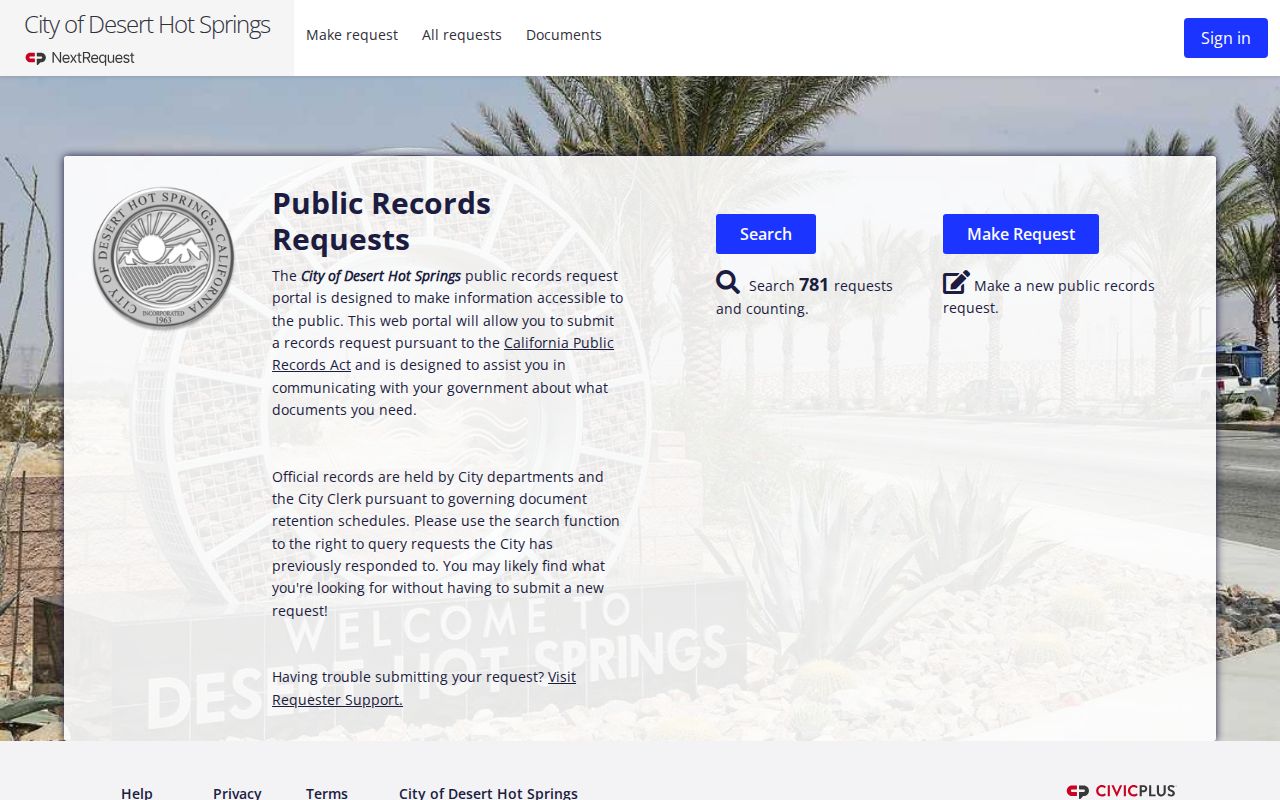
Old request titles can reveal the right department and record label before a fresh CPRA scope goes in.
Official Desert Hot Springs Resident Records
Official records and commercial people-data products answer different questions. A county index sits close to the source but serves a narrow purpose. A compiled profile blends many sources. Yet the match, the date, and the origin can be hard to inspect. Start with the primary custodian. A Desert Hot Springs residents directory search deserves that rigor. Family history, an estate, a records correction, or a scam check may ride on the result.
| Route | Strength | Limit |
|---|---|---|
| County or city record | Named custodian and defined field | May omit residents, redact fields, or stop at a date |
| State lookup | Authoritative status, license, or entity data | Each tool serves a narrow record type |
| Historical collection | Context for older names and addresses | OCR, gaps, and old geography require checking |
| Commercial compiled profile | May gather scattered clues | Can be stale, costly, or merge names incorrectly |
A compiled listing never outranks a sealed court file. The same holds for Safe at Home protection, confidential voter status, or an official correction from the records office itself. Save the source URL, the result date, and the record number so the next person can repeat the lookup.
Desert Hot Springs Historical Resident Records
History here begins at the county level. Desert Hot Springs incorporated in 1963, so anything older lives in Riverside County and regional sources. One digitized volume stands out. The Library of Congress hosts History and Directory of Riverside County, 1893–4 as 360 page images. A. A. Bynon & Son published it through the Riverside Daily Press printing office. It covers the whole county. That means regional names, businesses, biographies, and context rather than a house-by-house list.
Local archives carry the deeper material. Riverside Public Library's Local History Archives at 3900 Mission Inn Avenue holds regional books, clippings, photographs, maps, and indexes by appointment. The branch catalog rewards a search. Staff at the Desert Hot Springs Library at 14380 Palm Drive can search the catalog and vertical files for local newspapers, phone books, yearbooks, obituaries, and directories. Its own timeline offers custody clues. A branch existed by the late 1940s, a community-built building was dedicated in 1956, and the branch moved to West Drive in 1972. The current Palm Drive building opened in June 2021.
For the full collections and a sound reading method, use the Desert Hot Springs city directory collection guide. It also explains the difference between a city directory and a criss-cross volume. Old addresses deserve company. Pair them with deeds, census schedules, newspapers, and maps instead of reading them against modern city boundaries.
Before Desert Hot Springs Became a City
Riverside County did not exist until 1893. It was carved from parts of San Bernardino and San Diego counties. A name or land record from the same ground may therefore sit under a predecessor county. The 1893–94 county directory bridges that break. It coincides with the new county and supplies a digitized name source for a region that predates Desert Hot Springs.
Growth came from homesteads and mineral-water resorts. Desert Hot Springs incorporated in 1963. City permits, council minutes, licenses, and code series cannot predate the municipal government that created them. Earlier address research belongs elsewhere. County land and assessment records, federal census schedules, newspapers, private resort material, and legal descriptions hold that older era. The first public bathhouse is real local history. A modern street label is the wrong key.
- 1893: Riverside County formed; the founding-era county history and directory becomes a regional name source.
- 1940s: Desert Hot Springs library presence is documented by the late 1940s, useful for locating community ephemera.
- 1963: Desert Hot Springs incorporated; city-created record series begin after municipal government exists.
- 1974: Online Riverside recorder indexing begins; older deed work shifts to office books, media, or staff searches.
That timeline prevents a common error. Treating a missing city record as proof that a person or structure never existed is exactly the mistake to avoid.
Protected Desert Hot Springs Resident Records
California public access has real limits. Safe at Home serves qualifying survivors and specified protected workers. It gives them a substitute mailing address with mail forwarding. Confidential voters can shield residence details in qualifying life-threatening circumstances. Recorded documents and voter signatures carry separate protection rules. Driver-license and Social Security data do too. DMV personal information has its own rules as well.
The state's DROP deletion portal opened to resident requests on January 1, 2026. Registered data brokers began processing requests August 1, 2026. They must check for new requests at least every 45 days. DROP can affect broker-held names, ZIPs, phones, and emails. It cannot erase a valid deed or court record. The Safe at Home program page explains the address-confidentiality route in detail. California My Voter Status works differently. It asks the voter for identifying details. It returns only that voter's status, never a public neighbor directory.
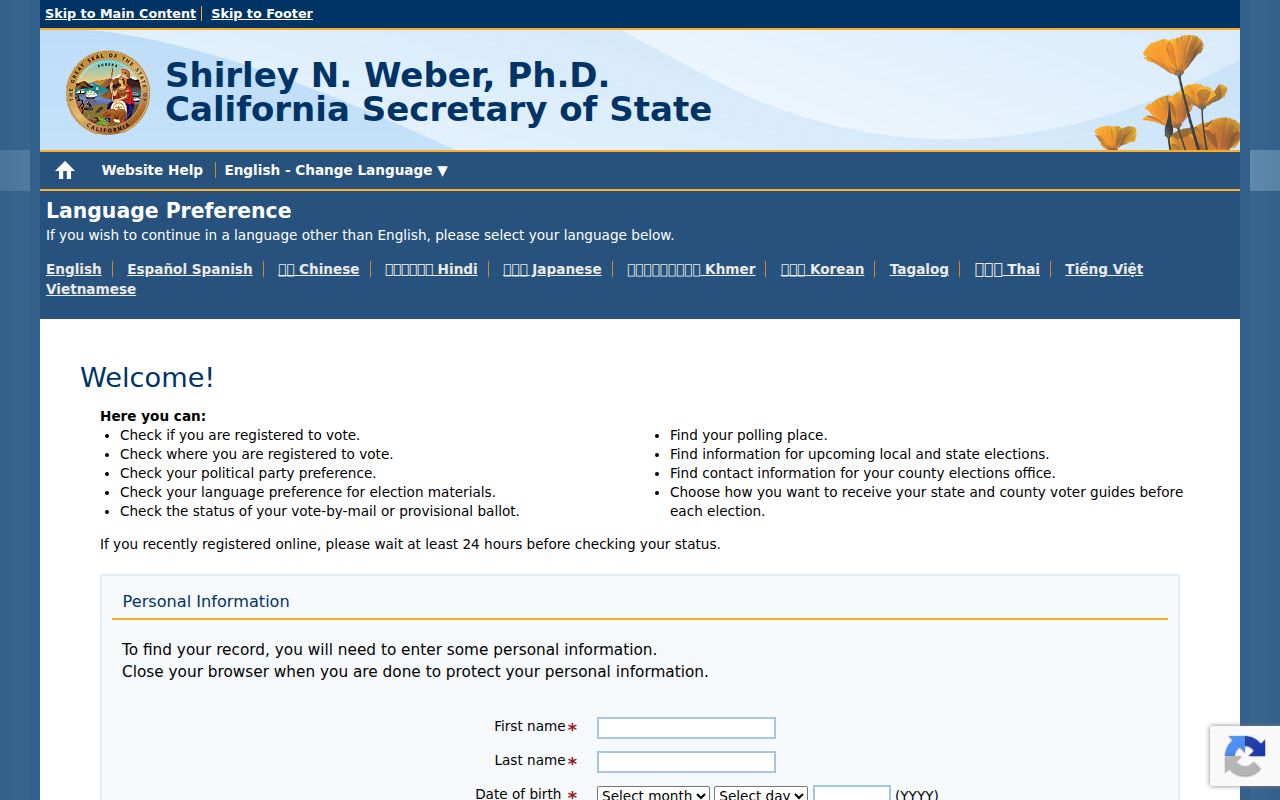
That form cannot be reversed into a street list.
Lawful personal use. Records can support family history, civic research, estate work, and personal safety checks. Never use a Desert Hot Springs residents directory to stalk, harass, intimidate, or harm another person.
Desert Hot Springs Directory for Heirs
Heir searches need a human route. Probate petitions, notices, obituaries, and the Riverside court record can all point toward an heir or an estate. An obituary is only a lead. It may hint at kin, a last residence, or a service, while the court file or vital record is the better confirmation. The State Controller's unclaimed-property search is another free option. It covers property the state may hold.
Old classmates take a different path. School yearbooks, the Desert Hot Springs Library catalog, Palm Springs regional collections, and an alumni group's voluntary contact channel all beat a cold name search. Birth-family searches belong elsewhere too. California's official adoption consent process governs them, not public birth-certificate fishing. Business owners separate cleanly by entity, FBN, license, and parcel numbers. Each path keeps consent rules in view.
Region matters as much as the city. Desert Hot Springs names show up in Palm Springs and Coachella Valley newspapers, phone directories, yearbooks, and museum files. The Palm Springs Public Library genealogy route is unusually rich. It offers digitized Desert Sun issues from 1934 to 1993, yearbooks, phone directories, library databases, and librarian help. Precise names, dates, and places help most. A Desert Hot Springs residents directory serves families best when it sends a question to the archive or office that can verify it.
Note: A strong resident lookup ends with a named custodian, a dated result, and a reason the record fits the person or address.